TCF Canada Reading Tips 2026: A1-C2 Strategy Guide
By Claire AI — TCF Canada Prep Platform Editorial — TCF Canada Specialists · Updated 2026-04-30
TCF Canada Reading: Format and Structure
The TCF Canada reading comprehension section (Compréhension écrite, CE) consists of 39 multiple-choice questions to be completed in 60 minutes. Unlike listening, you control the pace — you can go back, skip ahead, and revisit questions. This flexibility is your greatest advantage, but only if you manage your time wisely.
Like listening, the reading section follows a progressive difficulty model. The questions start at A1 and climb to C2. Understanding this progression allows you to allocate your time strategically.
Difficulty Progression and Time Allocation
| Questions | CEFR Level | Text Type | Recommended Time |
|---|
| Q1 – Q10 | A1 / A2 | Signs, labels, short notices, menus, simple ads | 5 – 8 minutes |
| Q11 – Q25 | B1 | Short articles, emails, instructions, informational texts (150–250 words) | 20 – 22 minutes |
| Q26 – Q39 | B2 / C1 / C2 | Long articles, editorials, academic excerpts, literary passages (300–600 words) | 30 – 35 minutes |
Strategic insight: Spend no more than 8 minutes on Q1–Q10. These are easy points that should not consume your time. Save your mental energy for Q26–Q39, where each question is worth the same but requires much more careful reading.
Strategy for A1 Questions: Images, Signs, and Labels (Q1–Q7)
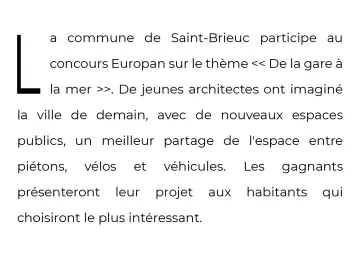
The first 7 questions typically present images of signs, labels, posters, or menus. You must identify what the sign says or what information it conveys.
- Read the visual text carefully. Look at every word on the sign or label. The answer is usually a direct match — no interpretation needed.
- Watch for common sign vocabulary: interdit (prohibited), fermé (closed), ouvert (open), entrée (entrance), sortie (exit), gratuit (free), complet (full/sold out), horaires (hours).
- Don't over-interpret. If a sign says "Fermé le lundi" (Closed on Monday), the answer is simply that the place is closed on Monday. Don't infer anything beyond what's written.
Strategy for A2 Questions: Short Practical Texts (Q8–Q10)
These questions present short practical texts — classified ads, brief notices, simple emails, or event announcements.
- Identify the text type first. Is it an ad (selling something), a notice (informing about an event), or a message (communicating with someone)? This sets your expectations.
- Locate specific information. Questions at A2 level typically ask for factual details: What is the price? When is the event? Who is the text for?
- Scan for numbers, dates, and proper nouns. These are often the key to the correct answer.
Strategy for B1 Questions: Medium-Length Texts (Q11–Q25)
This is the largest block and a critical zone for NCLC 7 candidates. The texts are 150–250 words and cover everyday topics: health, travel, technology, education, environment.
- Read the questions before the text. Glance at the question and options first so you know what to look for. This focused reading saves significant time.
- Identify the main idea in the first paragraph. French texts typically state the main point early. The first sentence or two often contain the thesis or topic.
- Pay attention to the author's purpose. Is the text informing, persuading, warning, or comparing? The purpose often determines the correct answer for "What is the main idea?" questions.
- Look for paragraph structure. Each paragraph usually develops one idea. If a question asks about a specific topic, find the relevant paragraph rather than re-reading the entire text.
- Watch for conjunctions. Words like car (because), donc (therefore), pourtant (yet), néanmoins (nevertheless), and ainsi (thus) signal logical relationships that are frequently tested.
Strategy for B2–C2 Questions: Long Complex Texts (Q26–Q39)
These are the most challenging questions, featuring texts of 300–600 words on specialized topics: social issues, scientific research, cultural criticism, philosophical arguments.
- Use layered reading. First pass: skim for overall structure and main argument (30 seconds). Second pass: read carefully the paragraphs relevant to the question (60–90 seconds). This is more efficient than reading every word once.
- Identify the author's position. B2 texts often present arguments. The question may ask what the author thinks, not what a quoted expert thinks. Distinguish between the author's voice and cited opinions.
- Understand implicit meaning. At C1/C2 level, the correct answer may require inference. The text might not state something directly but strongly imply it through context and word choice.
- Handle unknown vocabulary strategically. You will encounter unfamiliar words. Use context clues, word roots (Latin/Greek prefixes and suffixes), and the surrounding sentence to infer meaning. Don't let one unknown word prevent you from understanding the paragraph.
- Read the final paragraph carefully. French academic writing often places conclusions and nuanced positions in the final paragraph. Many questions target this section.
Common Traps in TCF Reading
- Keyword traps: An option contains a word from the text, but the meaning in the option is different from the meaning in context. For example, the text mentions "un développement durable" (sustainable development) and an option discusses "le développement de l'entreprise" (company growth). Same word, different meaning.
- Negation traps: French has several negation structures that change meaning subtly:
- ne...que = only (not a full negation): "Il ne mange que des légumes" = He eats only vegetables
- ne...plus = no longer: "Elle ne travaille plus ici" = She no longer works here
- sans = without: "sans aucun doute" = without any doubt (meaning: certainly)
- ne...ni...ni = neither...nor: "Il ne boit ni café ni thé" = He drinks neither coffee nor tea
Misreading these structures leads to selecting the opposite of the correct answer.
- Tense confusion: A text might discuss what was the case (passé composé/imparfait) versus what is the case now (présent). An option that was true in the past may not be the answer to a question about the current situation.
- Over-inference: At B2 level, some students read too much into the text. If the text says "Les résultats sont encourageants" (The results are encouraging), don't infer that the project was a complete success. Stick to what the text actually states or clearly implies.
- Partial-correct options: An option may be partially correct — it captures one aspect of the answer but misses the main point or adds information not in the text. Always look for the most complete and accurate option.
Time Management Strategy
With 60 minutes for 39 questions, you have roughly 1.5 minutes per question on average. But the time should not be distributed evenly.
- Q1–Q10 (A1/A2): Target 30–45 seconds per question. These are quick reads with obvious answers.
- Q11–Q25 (B1): Target 1.5 minutes per question. Read the question first, then scan the text for the answer.
- Q26–Q39 (B2–C2): Target 2–2.5 minutes per question. Allow time for layered reading and careful elimination.
- Keep a 3-minute buffer. Use the final 3 minutes to revisit any flagged questions. If you flagged more than 3, prioritize the ones where you had it narrowed down to 2 options.
Practice Recommendations
- Build reading stamina. Practice reading French texts of 400–600 words without stopping. Articles from Le Monde, Le Figaro, and Radio-Canada are excellent sources.
- Expand vocabulary by theme. TCF readings cover recurring themes: environment, technology, health, education, work, culture. Learn 20–30 key terms per theme.
- Practice timed sets. Our platform offers 1,677 reading questions organized in 43 sets. Simulate test conditions by completing a full 39-question set in 60 minutes.
- Analyze your errors. After each practice set, categorize your mistakes: Was it a vocabulary gap? A negation trap? A time management issue? Target your weakest category in the next session.
- Read actively. After reading any French text, ask yourself: What is the main idea? What is the author's opinion? What evidence is presented? This builds the analytical skills tested at B2.
Final Checklist Before Test Day
- You finish 39 questions within 55 minutes on practice sets (leaving a buffer)
- You score 28+ out of 39 consistently
- You can identify negation structures (ne...que, ne...plus, sans) instantly
- You always read the question before the text for B1 passages
- You can skim a 400-word text and identify the main argument in under 30 seconds
The reading section is the most controllable part of TCF Canada. With disciplined time management and targeted practice, you can maximize your score.